

Borrow a Safety Habit From These Award-Winning Labs
Explore how this year’s Lab Safety Award winners make room for questions, share responsibility and keep safety part of the routine.
An ergonomic mouse. A lending library of field gear. A Slack channel where small safety questions are welcome.
These are a few ways this year’s six UC Davis Lab Safety Award winners keep safety in their daily routine. Across field sites, chemistry labs and computer screens, their practices encourage team members to ask questions, prepare for hazards and look out for one another.
"When you have a safety culture, there is a thriving understanding of the logic and the why, and you have buy-in from your team," said Veronica Thron, research safety manager with Environmental Health and Safety, who organizes the Lab Safety Awards. “A good safety culture can also become self-sustaining.”
The winners earned near-perfect annual Lab Safety Review scores, plus additional points through extra-credit questions and surveys.
Here they share approaches other labs can put to use.
About the awards
Each year, more than 980 UC Davis laboratories participate in the lab safety review program, run by EH&S, which feeds into the Lab Safety Awards.
Each winning lab collects $1,000 in prize cash supplied by their college or school. The grand prize winner earns an additional $5,000 from Safety Services and the Office of Research, plus the UC Davis Lab Safety Award trophy.
Lab Safety Awards are presented by UC Davis leaders during an event on Oct. 22. Look for coverage in Dateline after the event.
Show your team it’s OK to take a break
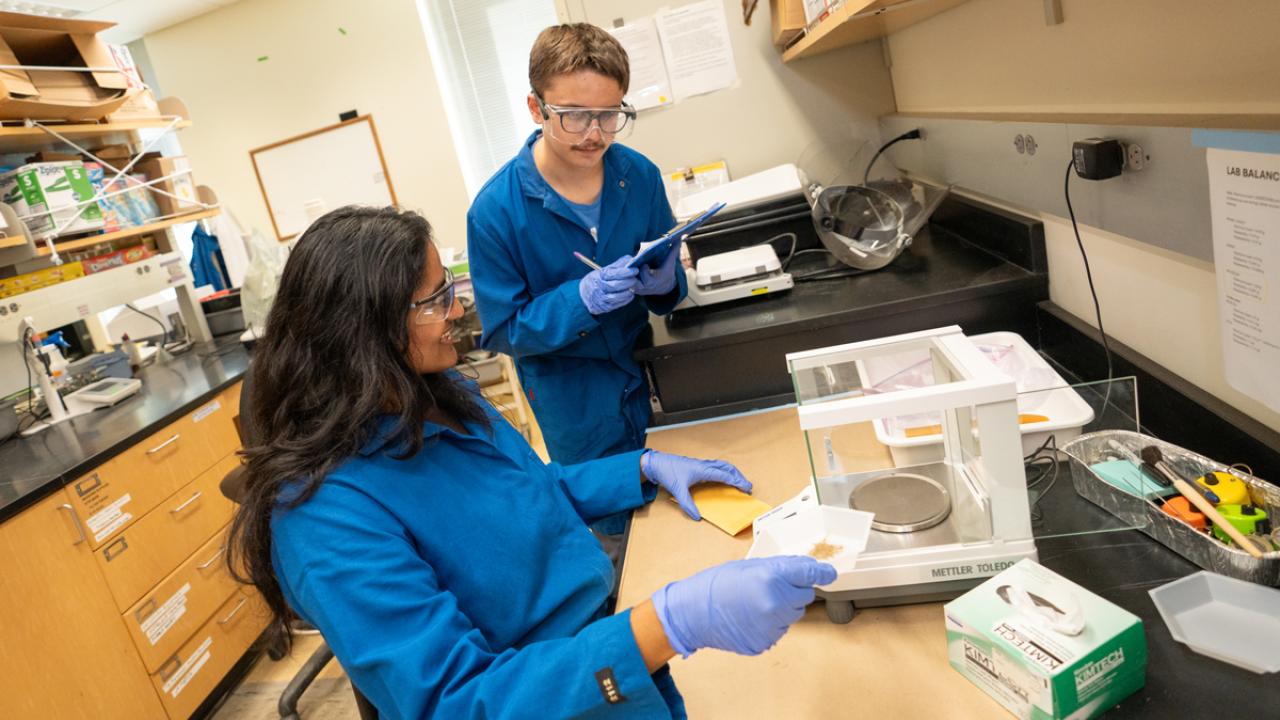
Eviner Lab wins Lab Safety Award Grand Prize and College of Agricultural and Environmental Sciences Honor
This year’s grand prize-winning lab is led by Valerie Eviner, ecosystem ecologist and professor in the Department of Plant Sciences. Her research focuses on restoration ecology, including how plant ecosystems recover from wildfires, invasive plants and livestock grazing.
The Eviner Lab works in a wide variety of sites, including remote grasslands, riparian systems, agricultural fields, greenhouses, a chemical lab and a soil lab on campus. All members of the Eviner Lab regularly engage in field research — including up to 10 undergraduate students who rotate through the lab each year.
Eviner herself models that there are days when you might need a break, to help encourage lab members to prioritize human safety.
“With every new member of the lab, on our first field days, I fake a need to take a break, due to heat or tiredness, modeling that it is important to take breaks as needed,” she said. “Heat is something where our dose response is different from day to day, and lab members who are more junior might feel less comfortable calling a time out.”
She also maintains a lending library of necessary field gear, to help make sure all lab members are safe and comfortable.
“We make it clear that the success of our research relies on us looking out for each other, regularly communicating, following protocols, and looking for ways to improve safety and adjust,” Eviner said.
Preparing for field visits requires they go beyond usual protocols of safety to prepare for a wide variety of potential hazards — weather, wildlife, road conditions, fire potential, livestock, tripping hazards and plant hazards. During the rainy season, her team has driven around a bend to find the road blocked by a fresh landslide. Conversely, in the dry season when wildfire risk is high, they sometimes plan field visits strategically for an easier exit as the day heats up.
They also take care with safety protocols as environmental stewards, to avoid introducing something new or invasive as they move plants, soil, seeds and potentially microbes between California locations.
Keep safety questions flowing
Heffern Lab wins Lab Safety Award for the College of Letters and Science — also for a second time
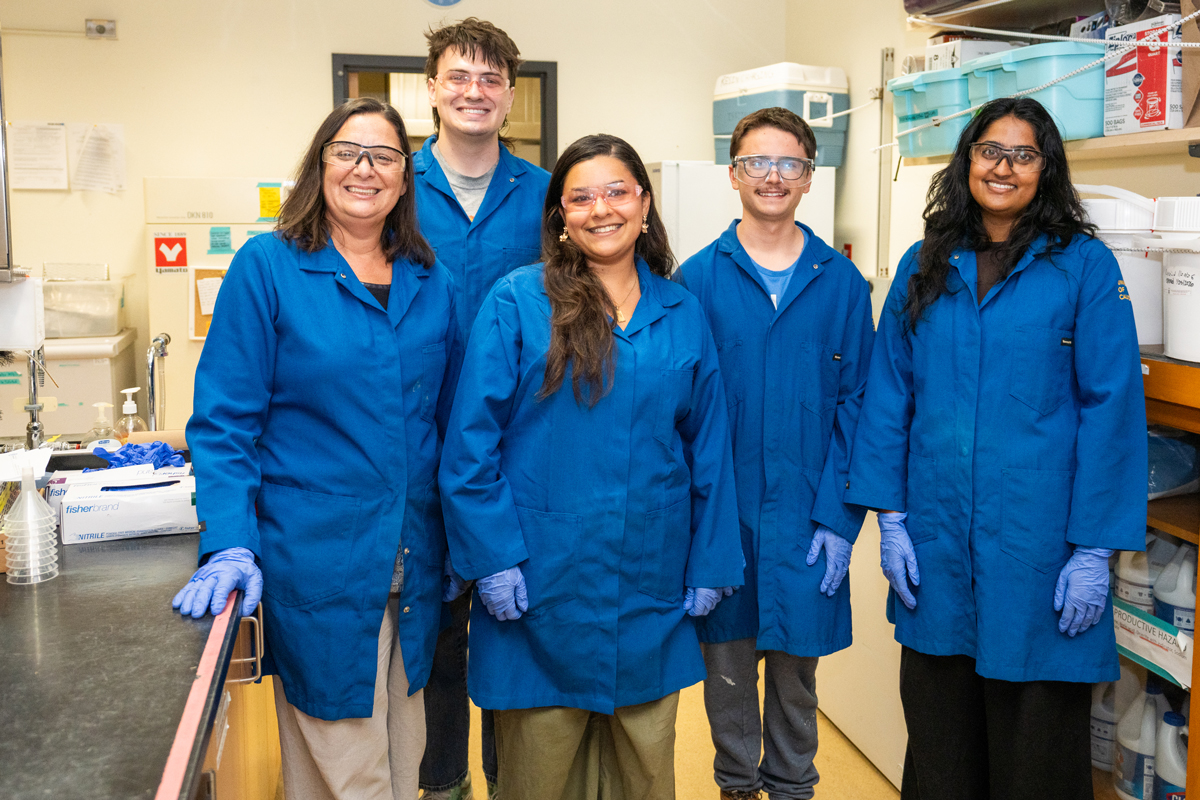
This is the second time Marie Heffern’s lab in the chemistry department has been honored as the Lab Safety Award winner from the College of Letters and Science.
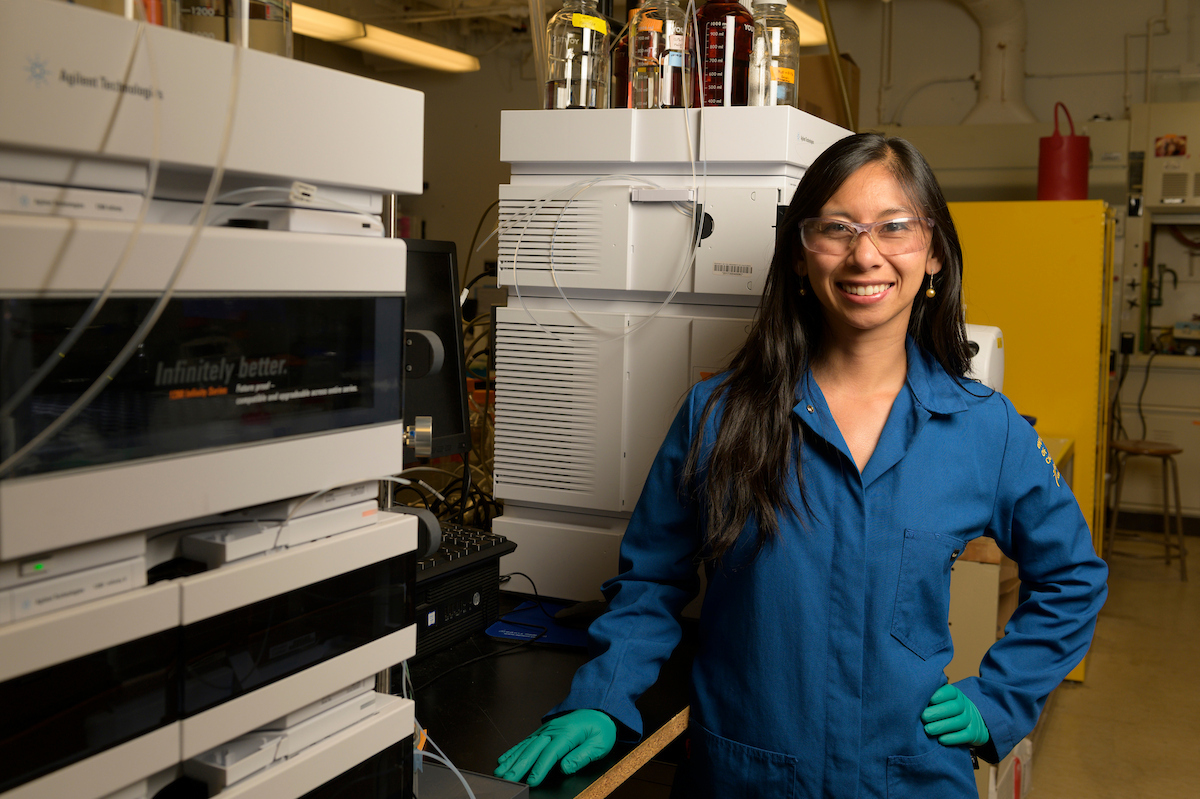
The Heffern Lab studies how metal micronutrients influence health and disease. The team is pioneering a new field of “metalloendocrinology” — or research on how metals interact with hormones — that could help explain why some people with diabetes don’t respond to GLP-1 drugs like Ozempic.
To do that work, the Heffern Lab operates a chemistry laboratory, analytic chemistry laboratory, molecular laboratory, an isolated cell biology laboratory, and a separate animal laboratory space. It's a very integrated lab, in terms of space and students working across chemistry and biology.
“We run into a lot of safety priority questions, with chemistry hazards and biological hazards,” Heffern explained. “When you’re working in a multi-functional space, you have to look at conflicting hazards and how they would affect the workflow, since many systems are designed for mono-functioning situations.”
The team has a dedicated Slack channel for #safety, to keep safety questions moving, including small things such as how to dispose of an unlabeled tube.
Primary and backup safety officers for chemical and biological domains help keep support available. Each protocol has a dedicated safety officer, spreading responsibility and leadership through the team.
The team also holds experimental methods-focused meetings, where members explain their experiments, hazards and troubleshooting to one another, building awareness of chemicals and equipment in the space — beyond each person’s own research.
"This is exactly the kind of lab-wide hazard awareness we're trying to build,” Heffern said.
From coral reefs to computer screens, safety follows the work
Bay Lab wins Lab Safety Award for the College of Biological Sciences — for a second time
Rachael Bay’s lab in the Department of Evolution and Ecology was selected for a Lab Safety Award for the second time, after first winning the grand prize in 2022. Her team uses genomic analysis to study coral reefs in the South Pacific Ocean, as well as limpets and eelgrasses along the California coastline, to better understand evolutionary responses to climate change.
In addition to sampling marine organisms, lab members extract DNA and RNA for the Genome Center to sequence, and then work in the computational lab with piles of data.
“One thing that is increasingly important is ergonomics in our computational work,” she said.
“More students in my lab have been injured from repetitive stress injuries than from injuries in the field," Bay said.
A graduate student in the lab, Shreya Banerjee, sought to improve their team’s computational ergonomics by getting everyone equipped with an ergonomic computer mouse.
Before traveling as part of a Bay Lab project, students fill out a field safety plan that addresses navigating travel, water safety, boat safety, intertidal work, equipment, animal safety, emergency contacts, and more.
“Everyone is going to be more productive when they feel safe in the field,” Bay said. “But we will always stumble. When we come across a situation where someone doesn’t feel safe, the important thing is to communicate around it. This makes us a better functioning team and makes for better science.”
Go beyond knowing where the first aid kit is
Carciofi Lab wins Lab Safety Award for the College of Engineering
One of the things that sets Bruno Carciofi’s lab apart is the use of high voltage in what might otherwise seem like a typical wet lab for a food science team in the Department of Biological and Agricultural Engineering. His research includes using technologies such as cold plasma or pulsed electric fields for food processing. These non-thermal tools use high voltage to potentially make food safer, increase its quality, make use of upcycled byproducts, or improve energy efficiency.
Their team shares a laboratory area in Bainer Hall with other groups, which requires coordinating their spaces and awareness of hazards in neighboring labs.
“We do training together and make sure that our hazards are communicated — and then learn their hazards too,” Carciofi said.
Because of the high electromagnetic fields in the immediate environment, people with pacemakers should not be in their lab.
“We put signs everywhere, and we remind students even if you’re just inviting a friend to pick up a notebook — tell them,” he said. “This is serious.”
Flavia Almeida, the lab’s manager and a postdoctoral researcher, explained they go a little beyond standard protocols even in basic safety training. Other labs make sure you know where the first aid kit is, but she prefers to ask, “Have you ever opened a first aid kit?” and then go through the items inside together.
“They need to understand what’s available inside of that kit beforehand, not just in an emergency when they need something,” Almeida said.
Make safety training a team activity
Veterinary Genetics Lab wins Lab Safety Award for the Weill School of Veterinary Medicine — with Bellone at the helm
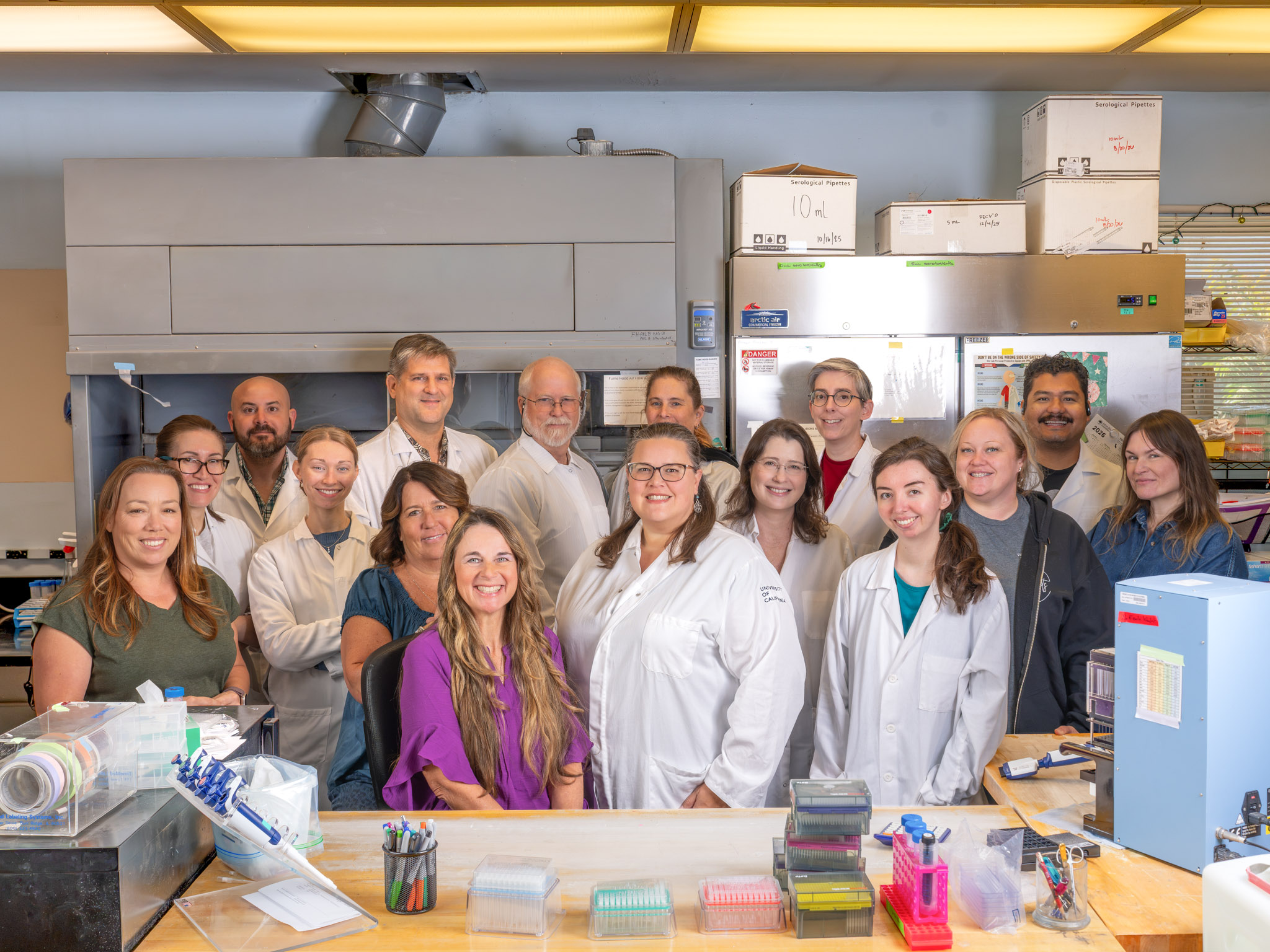
The Veterinary Genetics Lab, led by Professor Rebecca Bellone, is this year’s Lab Safety Award winner in the Weill School of Veterinary Medicine.
The lab provides DNA testing services, forensic testing and research for over 220,000 animals each year — across more than 20 species, including horses, dogs, cats, cattle and goats.
To get all of that testing done, this self-supporting lab has about 90 employees, including more than 20 undergraduate employees and student interns who are learning about science and contributing to the lab’s services.
"We are grateful and honored to receive this award," said Bellone. "It is a testament to our team's commitment to excellence and safety, led by our safety officer Natalia Ocampo, who is the driving force behind all things safety for our team."
Ocampo emphasized that teamwork is what sets their lab apart.
“At VGL, we look out for each other,” she said. “Staff regularly bring up safety concerns to me, and I make a point of listening to every staff member and student, then working with them, lab leadership, and EH&S to improve our infrastructure and make our workplace safer.”
One of Ocampo’s safety insights for fellow labs is: Make full use of EH&S as a resource. Her team recently had a biohazard spill response training from the Biosafety team that was not only informative, but actually fun too — which helped the lessons be more participatory and memorable.
Build safety in from day one
Gomez-Simmonds wins Lab Safety Award for the School of Medicine — at her first UC Davis lab
The Gomez-Simmonds Lab won this year’s lab safety award for the School of Medicine.
Dr. Angela Gomez-Simmonds studies how multidrug-resistant bacteria evolve, spread in hospitals and resist antibiotics — using genome sequencing and molecular typing. She also treats hospitalized patients with infectious diseases at UC Davis Medical Center.
Gomez-Simmonds joined UC Davis just over two years ago and started with safety as a priority when establishing her first independent lab.
“Working with resistant bacteria, we need to be in the right research setting and make sure we’re protecting our people in the lab,” she said. “I took a systematic approach to outlining the risks and having things prepared so that as I started to hire staff and bring on students, everyone was aware of the risks and how to handle bugs.”
The lab operates at Biosafety Level 2 in the Center for Immunology and Infectious Diseases, which also housed last year’s School of Medicine award winner.
She credits her lab’s manager, Kim Olsen, who has managed labs at the center for more than 20 years, as well as department safety coordinator Nicole Drazenovich and the supportive community there.
“It feels really nice to achieve this award together, as we work toward our first goals as a lab,” Gomez-Simmonds said. “I think it’s also recognition for our building and for Kim and Nicki and the CIID community. Having great stewards already in place to help set up the lab was really significant.”