

Celebrating 6 Labs That Put People and Safety First
Eviner Lab Wins Top Honor
Research Success ‘Relies on Us Looking Out for Each Other’
There’s a common thread among the six UC Davis labs honored with this year’s Lab Safety Awards — though their research topics vary widely, from California fields to reefs in the Cook Islands, from hospital bacteria to food processing innovations.
“What stands out about these teams is how seriously they take the responsibility of looking out for one another’s safety,” said Eric Kvigne, associate vice chancellor for Safety Services.
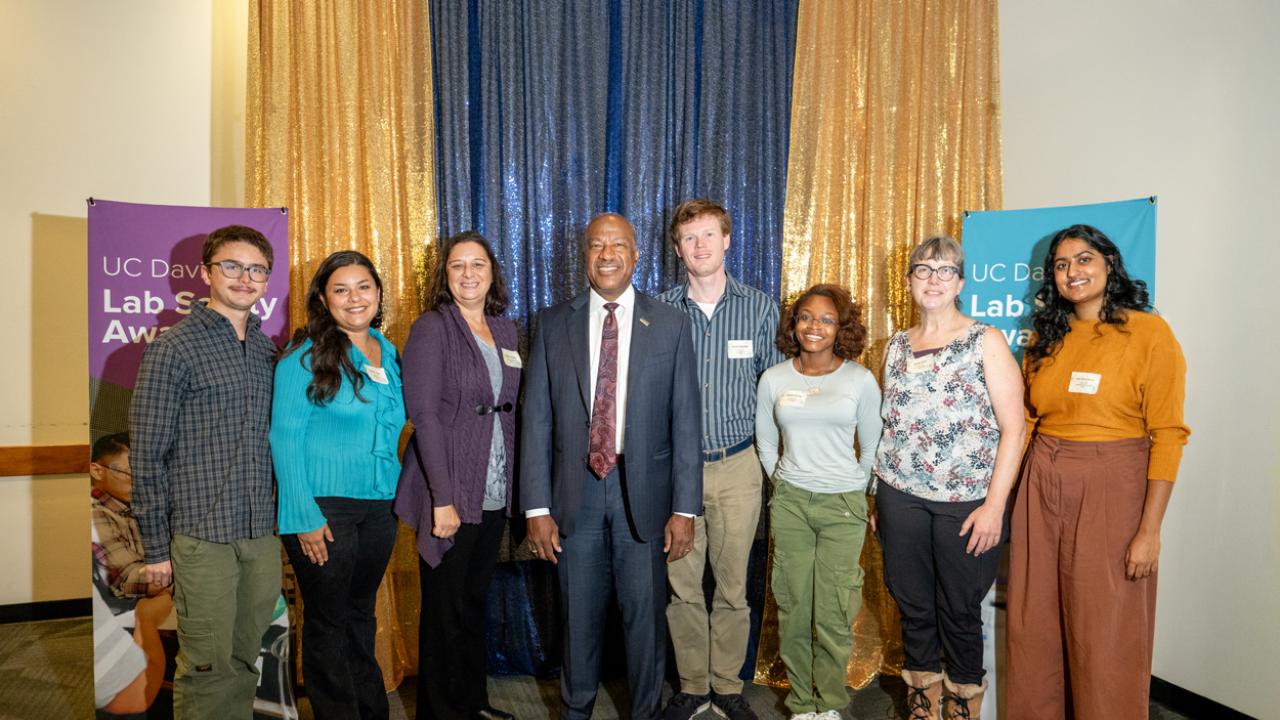
Caring for people first is a shared value and one modeled well by this year’s grand prize winner — the Eviner Lab from the College of Agricultural and Environmental Sciences.
The chancellor, provost, deans and other leaders turned out to honor the top labs and safety practitioners during the UC Davis Lab Safety Awards ceremony Thursday (Oct. 22).
Grand prize: Putting people first in the field
Professor Valerie Eviner in the Department of Plant Sciences studies ecosystem management and how plant ecosystems recover from wildfires, invasive plants and drought.
While she’s been collecting field samples for more than 30 years around Hopland Research and Extension Center, Eviner knows the students who rotate through her lab may still be trying to prove themselves. So she has a simple trick for showing that she prioritizes human safety and speaking up for your concerns.
“With every new member of the lab, on our first field days, I fake a need to take a break, due to heat or tiredness, modeling that it is important to take breaks as needed,” Eviner said. “We make it clear that the success of our research relies on us looking out for each other, regularly communicating, following protocols, and looking for ways to improve safety and adjust.”
Winning labs, by college and school
Other winning labs were:
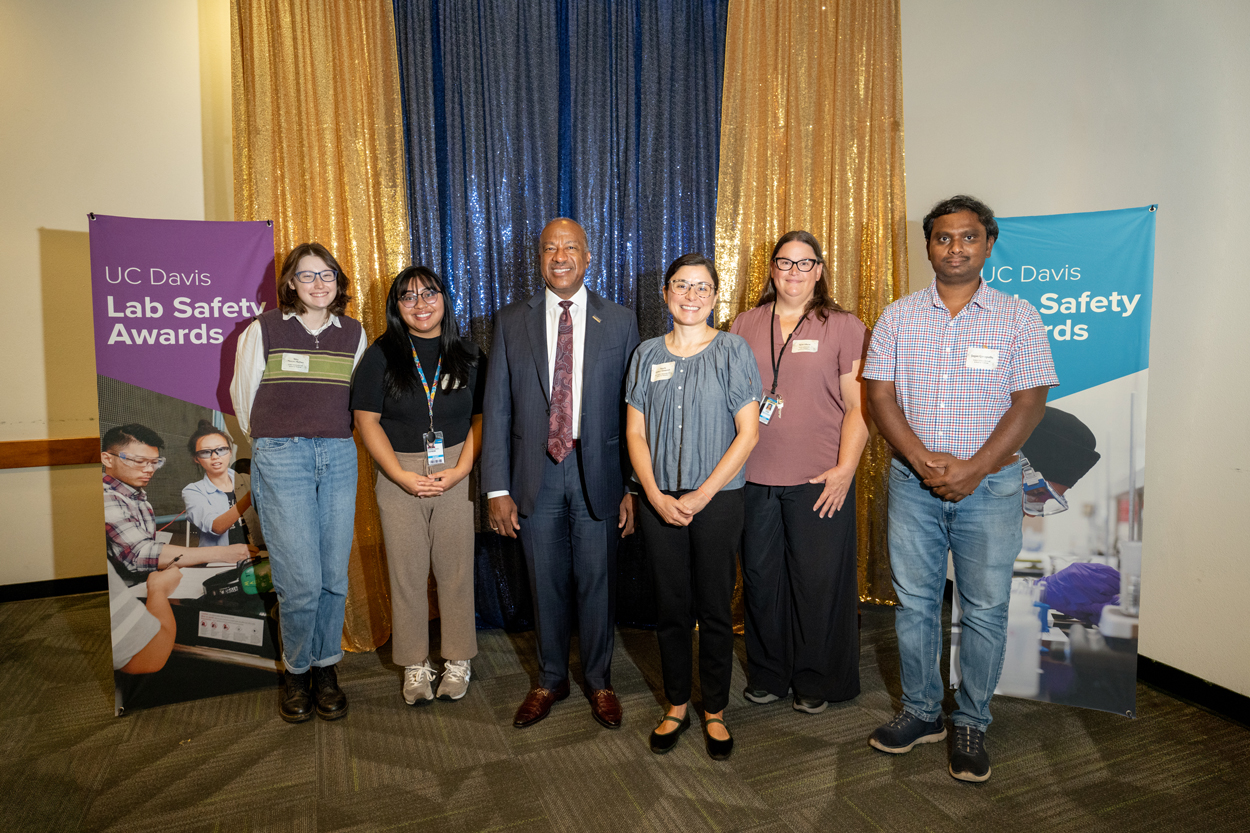
School of Medicine — Gomez-Simmonds Lab, led by Angela Gomez-Simmonds in the Center for Immunology and Infectious Diseases. This is the first independent lab of Gomez-Simmonds, an early-career faculty member and physician whose research focuses on studying how multidrug-resistant bacteria evolve in hospital settings.
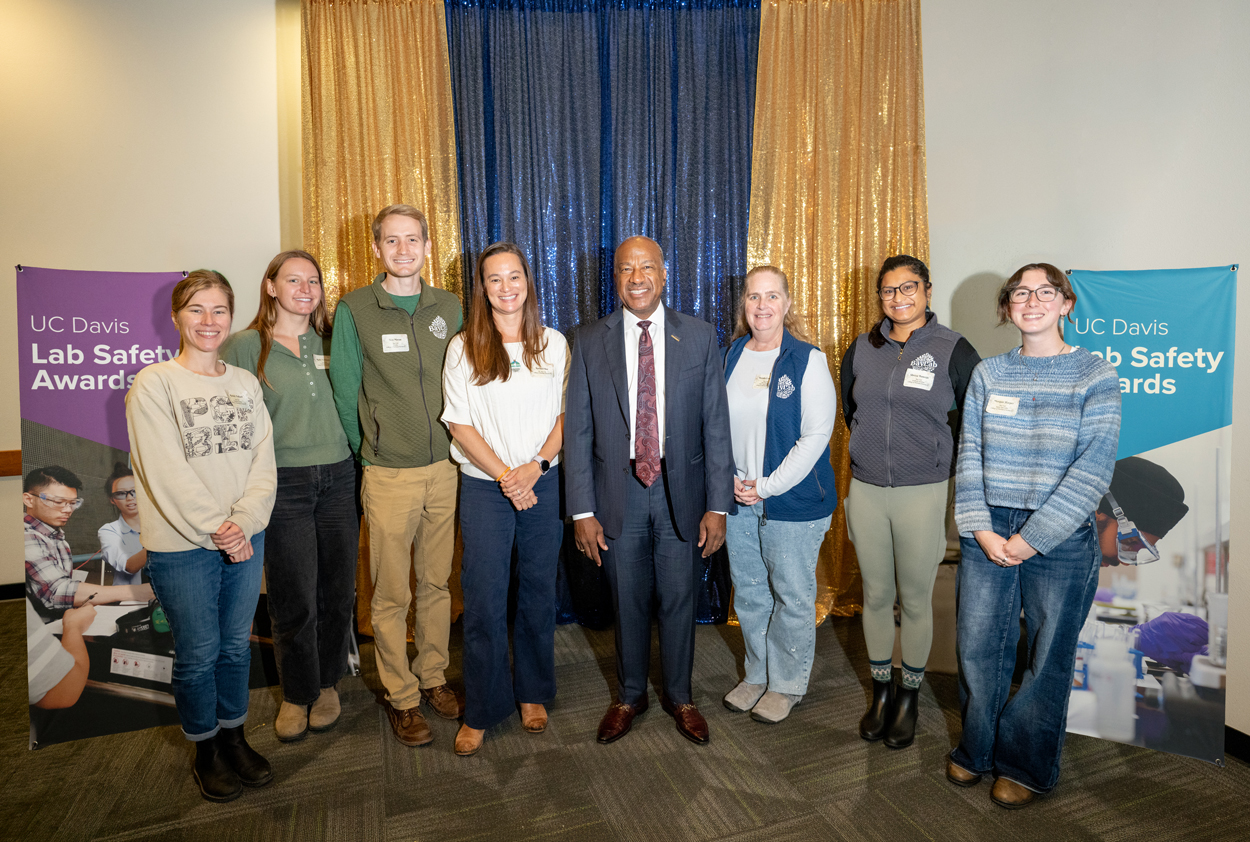
College of Biological Sciences — Bay Lab, led by Rachael Bay, Department of Evolution and Ecology. Covered by National Geographic recently, the Bay Lab studies coral reefs in the Cook Islands – in addition to other marine life along the California coast — to better understand evolutionary responses to climate change. Her team’s safety efforts span field safety plans for international travel to ergonomic improvements in their computational lab.
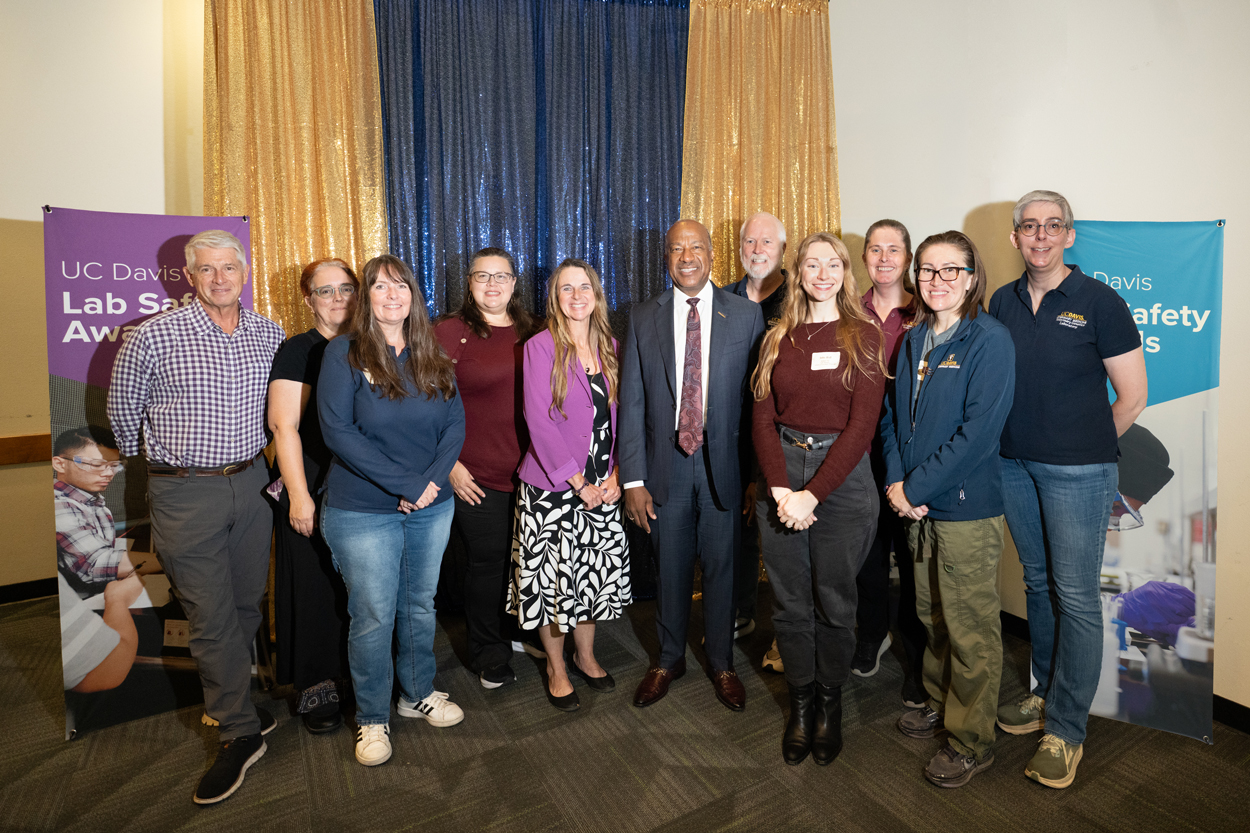
Weill School of Veterinary Medicine — Veterinary Genetics Laboratory, led by Rebecca Bellone. The Veterinary Genetics Lab team of 90-plus employees tests more than 220,000 animal samples each year, as a long-time pioneer in animal DNA testing for parentage, disease diagnostics, and forensics across more than 20 species of pets, livestock and wildlife.
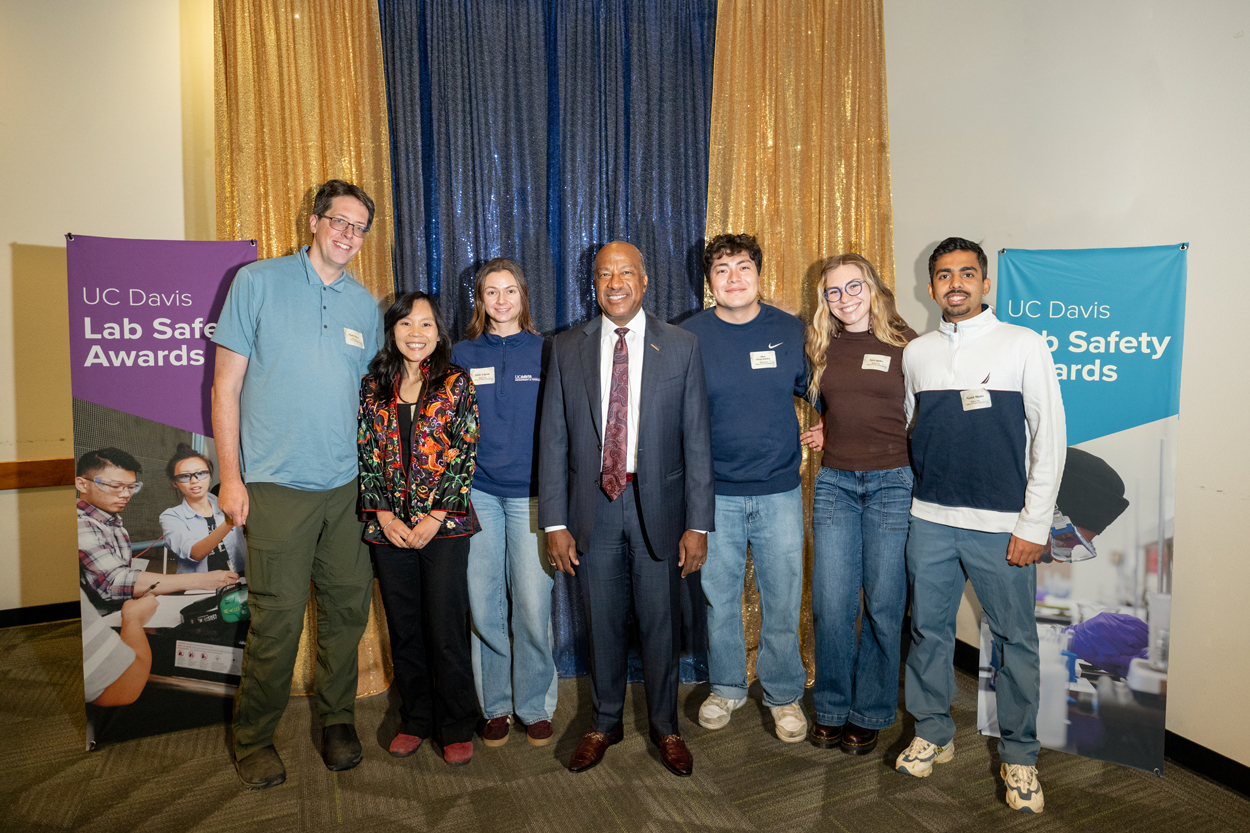
College of Letters and Science — Heffern Lab, led by Marie Heffern, Department of Chemistry. As a pioneer in researching how metals interact with hormones and peptides, the Heffern Lab operates multiple lab spaces in a very integrated way, across chemistry and biology — and must manage conflicting hazards and workflows to keep safety in focus.
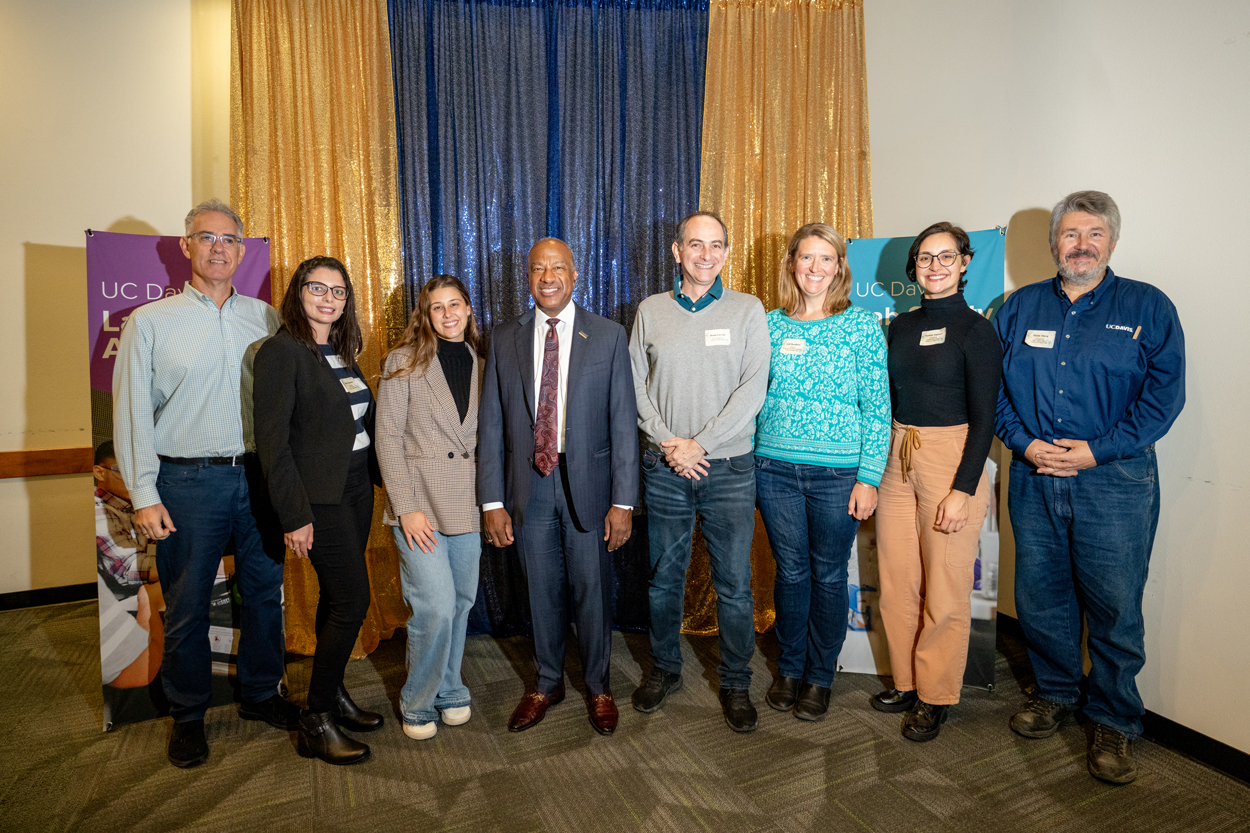
College of Engineering — Carciofi Lab, led by Bruno Carciofi, Department of Biological and Agricultural Engineering. The Carciofi Lab innovates with cold plasma and electrical pulses in a wide variety of food engineering processes — which requires managing high electromagnetic fields in an otherwise typical wet lab environment.
“It’s remarkable work that you’re all doing, and your commitment to safety makes that possible,” Chancellor Gary S. May told the honorees. “You’re showing that world-class research and world-class safety go hand in hand.”
Each winning lab received $1,000 from its college or school. The Eviner Lab’s award included an additional $5,000 from Safety Services and the Office of Research, along with the Lab Safety Award trophy.
Next year’s safety reviews are in progress
Each year more than 980 UC Davis laboratories participate in the Environmental Health and Safety lab safety review program, which feeds into the awards. This year’s winners earned near-perfect review scores, with additional points through extra-credit questions and surveys of lab safety staff.
Departmental safety coordinators and EH&S staff members work with research labs throughout the year to identify hazards and strengthen safety practices.
Annual inspections are already underway for next year’s lab safety awards.
A version of this article originally appeared in Dateline.
Read more about the safety practices of the award-winning labs
Explore insights from each of this year's winning labs on how they establish a culture of safety, incorporate safety into their routine and other safety leadership examples.